
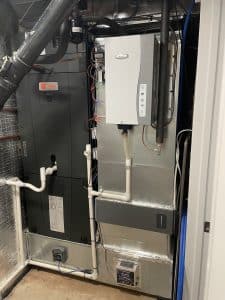
Many residents in the Bucks County area own electric heat pumps due to the lack of availability of underground natural gas lines and the low cost of initial installation for homebuilders. Some things we always hear about customers experience with heat pumps are they’re always cold during the heating season, cause huge PECO bills, and wish they had gas or propane. Heat pumps have come a long way in recent years, and truly are the future of our industry. Whether your goal is to cut monthly costs, lower your carbon footprint, or to finally have a comfortable home in any season, heat pumps can now achieve them all given the right installation conditions.
There is definitely a taboo about the word heat pump, and you must have a positive experience along with some understanding to really open your mind to electrification. While the United States has been late to the party on this one, Asia, Europe, and Canada have had great success for years with new inverter driven heat pumps. If they can provide heat in Canada, you bet they can deliver consistent heat here in Southeast Pennsylvania.
First let’s take a step back and talk about the product and basically how it works. For starters, the word heat pump in itself was probably the absolute worst name they could have possibly come up with. They move the lowest amount of heat per hour compared to any other heat source in our industry. Heat pumps are simply air conditioners in reverse. Instead of removing heat from your home as we do in the summer months, we are now removing cold. As the air passes through your air handler or evaporator coil, the refrigerant is soaking up those cold temperatures and sending them to the outdoor unit. When it arrives at the outdoor condenser, heat energy in the atmosphere is absorbed and trapped in the refrigerant, then sent inside to begin the cycle again. Most heat pumps will have an indoor coil temperature of 95-100*F, about 40*F lower than natural gas and 80*F lower than oil heat. Now let’s take this information and apply it to expectation. Heat pumps are great at maintaining indoor temperature but are slow at increasing temperature. That extra workload is aided by the use of electric strip heat, also known as the dreaded emergency or auxiliary heat. While resistive loads like strip heat are 100% efficient, their electrical usage cost is extremely high at the PECO rate of 9.244 cents per kWh. This is why we don’t recommend a scheduling thermostat which allows the house to cool down when we are away from the home or during nighttime hours. Generally, if you task a heat pump with raising indoor temperatures more than 2* at a time it engages the aux heat for the extra power it needs to perform that workload demand. The energy consumed during that heating cycle is the same as turning on an electric oven with all four burners and leaving them on for the same amount of time. You’re not saving any money at all; you are in fact losing it. To put auxiliary heat electrical requirements into perspective, a commonly installed 20kW heat strip uses as much electricity as the total power available in my first home. The entire electrical panel from that home would be powering one heat strip.
As for maintenance, heat pumps need to be seen at least twice per year. They run approximately 10 months out of the year which is no small task. They are expected to operate flawlessly during the hottest and coldest conditions our weather can dish out. When servicing a heat pump, it is so much more than a filter change and someone carrying around some old dial gauges. Every part needs to be cleaned, inspected, and measured to manufacturer specifications. Most importantly that system needs to be observed under stress to see what will happen when temperatures drop. A thorough maintenance appointment greatly reduces the probability of a breakdown. Heat pumps are especially prone to failure due to the high number of hours per year it operates plus the electronic complexity of the product. Many times, a heat pump condenser is disabled and the customer finds out a month later when they receive a sky-high utility bill. Since heat pumps employ two separate sources of heat many homeowners learn they have been operating solely on auxiliary heat for weeks. Any money saved by skipping semiannual maintenance is lost tenfold to a high utility bill. Also, keep in mind manufacturers place safety limits in their products so if it believes its performance is out of normal operating range it will automatically shut down to reduce the chance of further damage. These limits can trip from things as simple as grass clippings or insects entering the outdoor unit. Heat pumps that are serviced regularly are also the easiest and fastest for a technician to get back online after an unfortunate breakdown. When you have no heat, it is of the utmost importance to get that system back up and running quickly. Having a knowledgeable technician who hears your comfort concerns and understands the product is priceless. Maintenance should be performed on heat pumps when outdoor temperatures are over 70*f and under 45*f. Don’t go for the early bird specials and coupons, every air conditioner works when it’s cool and every heat pump heats when it’s warm. As soon as the weather changes that system is likely to break down and you have paid double for your service which brings no value. CLA Mechanical sends the right person at the right time, every time.
Filters! They should be their own blog but are so deeply tied to heat pump performance it needs mentioned here. If you think its dirty, change it. If there is an extreme cold snap coming, change it. If you don’t remember the last time it was changed, change it. When the clocks change, change it. When you do change it, buy the cheapest 1″ MERV 6 or less filter available. Buy a case of disposable filters and leave them next to your air handler. Heat pumps depend on air volume, and when you install the best allergen HEPA filter available at Home Depot it’s like asking it to run a marathon with an N95 mask on. A dirty or restrictive filter will cost you a fortune in electric and lower the overall temperature of your home.
New inverter driven technology is driving the market for heat pumps, allowing us to have much higher efficiency, warmer indoor temperatures, increased filtration and air exchange, and greatly reduces or eliminates the use of auxiliary strip heat all together. They are eligible for up to $2350 in tax incentives and $350 in PECO check rebates. Inverter units are almost silent, use a fraction of the energy of traditional heat pumps, and aggressively dehumidify your home during AC season. When installed correctly, they provide the most consistent temperatures from room to room. Many modern units also have a user interface, such as the Bosch EasyAir app which shows daily usage along with error codes and troubleshooting. Inverter system air handlers can also be paired with larger Aprilaire 4″ media filters and steam humidifiers with no adverse effects.
Now this is where inverter technology changed our industry: lockout temperatures. Lockout temperatures are when heat pumps can no longer deliver the quantity of heat needed because of reduced outdoor temperatures. On traditional heat pumps, this was around 38*-42*F, not good at all. Auxiliary heat would have to be used in conjunction with the heat pump, driving up running cost while still underperforming. The outdoor unit would go into a forced defrost mode every 30 minutes, which believe it or not, is air conditioning mode along with auxiliary heat to retemper the cold air. That 3 or 4 ton unit would only be producing 1.5-2 tons of capacity when its needed most. This is the main reason why heat pumps got such a bad rap for so long, and people were not wrong at all. If it was peak summer and your AC put out half the cooling it was designed to, you wouldn’t be happy either. Inverter heat pumps can run down to -5* to -15*F before having performance losses. That is what changed the game for electrification and really got customers interested in installing a much better product. For the first time we are feeling warm air come out of our registers, drastically lower utility bills, and a longer service life span.
CLA Mechanical is not only a heat pump specialist but a satisfied heat pump owner in our own home. Whether changing over from fuel oil, liquid propane, or just updating an old system, your install can be done correctly with professional advice, a well thought out plan, and a lasting post installation relationship geared toward tuning your new product to your home. Hire a company who is enthusiastic about the project you are undertaking. Once that product is installed it is yours for the next 12-15 years! Make sure you are happy with your purchase every time you walk in your front door.